I spent $1,500 to fly to Glasgow. I ate haggis for seven days and watched criminal psychology videos in bed for forty-eight hours straight. Let’s talk about the trip that wasn’t.


Let me tell you about a solo trip nobody in my Instagram feed will ever see.
I flew to Glasgow. I’d been dreaming about it for months — the pubs, the walking tours, the mysterious grey light, the accents, the whole Scottish-solo-traveller fantasy I’d built in my head from a hundred Substack essays and a thousand travel reels. I bought the ticket during a low week at work, thinking: this is what I need. A trip. A reset. Some real time with myself, in a new city, doing whatever I want.
You know the story. I’ve written it before. The wild luxury of “let’s see.” The unmapped calendar. The gift of being able to book flights without consulting a partner.
I was going to live.
Here’s what actually happened.
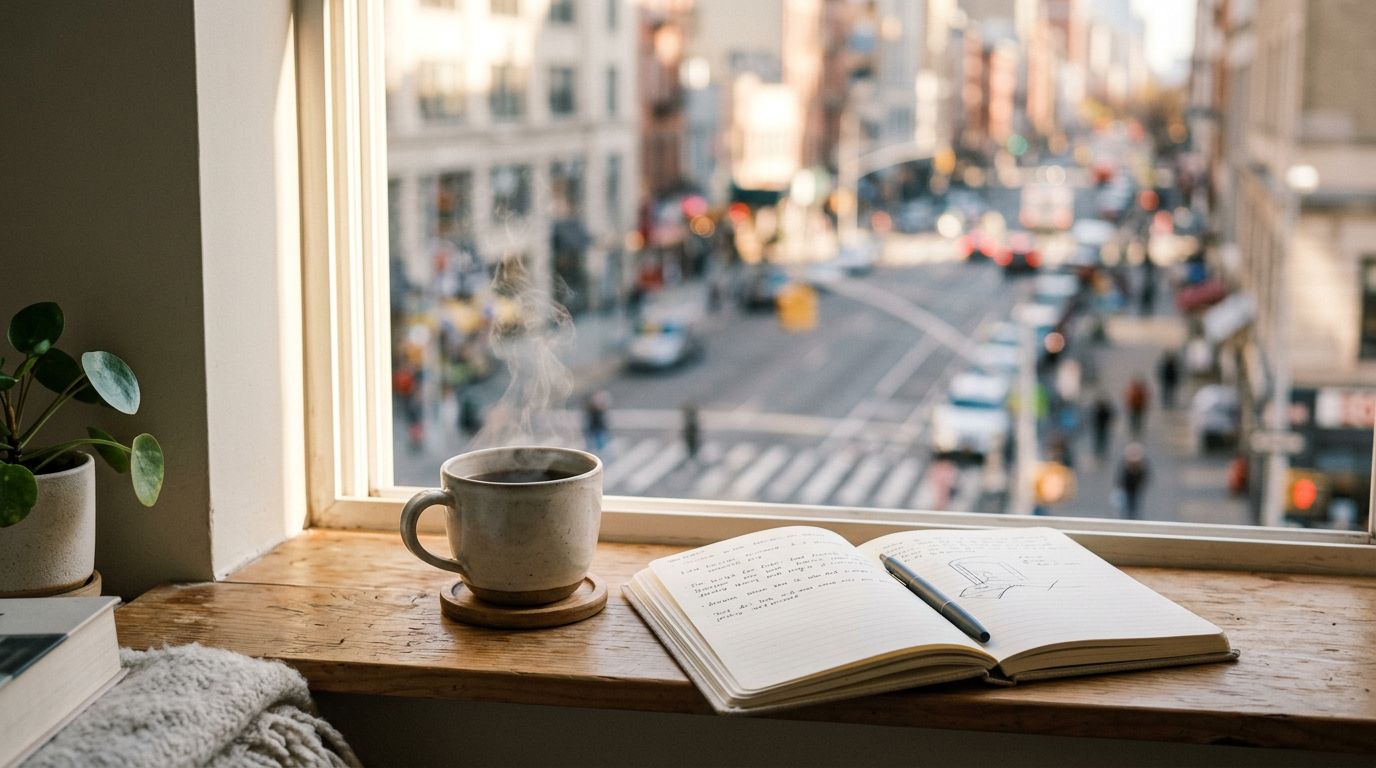
I landed. I checked into my Airbnb — a perfectly nice studio in the West End that I had spent forty-five minutes choosing based on reviews and Instagrammability. I unpacked. I sat on the bed. I looked out the window at the grey Glasgow sky. And I felt — nothing. Not excitement. Not even the low-hum anticipation of a first evening in a new city. Just tired. And slightly confused about why I was there.
I told myself: first-day slump. Push through. Go outside.
I went outside. I walked to a highly-rated pub the internet had promised me. I ordered haggis with neeps and tatties, because that’s what one does. It was fine. The pub was full of couples and groups laughing about things I couldn’t hear. I ate quickly and left.
I walked home.
I bought a small grocery haul on the way — bread, cheese, some strange Scottish snacks I was curious about.
I got into bed at 7 pm.
I did not leave that bed for the next forty-eight hours.
What Actually Happened in Those 48 Hours
Let me tell you honestly, because I think this is the part nobody writes about.
I watched criminal psychology videos on YouTube. Just… scrolled and let them autoplay. The Ted Bundy documentary. The Elizabeth Holmes documentary. Something about a con artist who married eight women. I would occasionally reach for the bread and cheese I’d bought. I would occasionally check the time and be startled that six hours had gone by. I would occasionally think “I should go outside” and then not go outside.
I felt guilty. That was the ambient emotional weather. Guilty for spending fifteen hundred dollars to be lying in bed watching YouTube. Guilty for not “using” my precious solo trip. Guilty for not doing the walking tour I had bookmarked. Guilty for not going to the museum. Guilty for not being the version of myself who had a “beautiful, transformative solo travel experience” and posted a serene selfie on Instagram from a Scottish moor.
Around hour thirty, I started scrolling flights home. I was not going to book them — the flights were expensive and I had five more days — but I wanted to. I wanted, very badly, to be back in my own bed in my own city, in my own routines, with my own eco-system. I missed the barista at my usual coffee shop. I missed my own kitchen. I missed the specific way the light came in through my own window in the morning.
I felt, for the first time in a long time, homesick.
Which was, itself, deeply disorienting. Because I was supposedly a person who loved solo travel. A person who ran a solo living newsletter. A person for whom the unmapped weekend was a soft power. And here I was, in one of the most walkable, welcoming, atmospheric cities in Europe, hiding in a rented bed watching a documentary about a serial killer, waiting for the trip to be over.
Nobody warned me about this.
The Feeling No Guidebook Names
I’ve since talked to other solo travellers about that Glasgow trip. And every seasoned solo I’ve spoken to has some version of the same story.
The friend who flew to Lisbon for two weeks and spent one of them in her Airbnb rewatching The Office on her laptop. The colleague who paid for a “restorative” beach vacation in Goa and did not leave the hotel property once because she couldn’t work up the energy to. The solo backpacker I met once who confessed, over a beer, that his six-month Southeast Asia trip had included two three-day stretches where he’d stayed in his hostel bed and cried.
Solo travel burnout is real. It has, to my knowledge, no clinical name. But every solo traveller who has done more than one trip has encountered some version of it. And nobody talks about it, because it doesn’t fit the story we’ve all been sold about solo travel.
The story goes: you’ll go, you’ll be transformed, you’ll return more yourself.
The reality is often: you’ll go, you’ll get tired, you’ll wonder why you paid for this, you’ll come home slightly bewildered, and you’ll only figure out much later what actually happened.
Let me try to describe what actually happened, because I think it’s worth naming.
What Solo Travel Burnout Actually Is
After Glasgow, I did a lot of thinking. And I came to believe that what I experienced was not a failure of my solo travel practice. It was, in a strange way, my brain doing exactly what it needed to do — just in a way I hadn’t expected and couldn’t recognise at the time.
Here’s what I think was happening.
One: I had been running on empty when I booked the trip. That “low week at work” I mentioned? It wasn’t just a low week. It was the tail end of a much longer stretch of quiet exhaustion that I hadn’t fully acknowledged. I booked Glasgow as a fix for burnout — the reasoning being that “getting away” would reset me. But you can’t outrun exhaustion by putting it on a plane. The tiredness follows you. It just arrives in a new city, without any of your familiar coping mechanisms.
Two: Solo travel requires executive function. This is the piece nobody names. When you travel with a partner or a group, one of you carries the cognitive load at any given moment — the other one can zone out, tag along, be tired. When you travel alone, every decision is yours. Where to eat, how to get there, what to do next, whether the neighbourhood feels safe, how to read the bus map, whether that price is normal. Every single micro-decision, all day, without a break. For a rested solo traveller, this is exhilarating — it’s the sovereignty we love. For a burned out solo traveller, it is unbearable. The brain that’s already depleted cannot handle a full day of continuous small decisions. It shuts down. It retreats to bed. It watches YouTube.
Three: I had confused change of scenery with rest. These are not the same thing. Scenery-change is stimulating. Rest is de-stimulating. When you are truly exhausted, what you need is your own bed, your own kitchen, your own rituals, and the deep, boring familiarity of not having to figure anything out. Solo travel is the opposite of this. It is, for a burned-out brain, more input. And the more input arrives, the harder the crash.
Four: I had internalised a story about who solo travellers “should” be. The Instagrammable version. The transformative one. And so when my actual experience turned out to be “I want to lie down and not talk to anyone,” I couldn’t accept that as legitimate. I felt like I was doing solo travel wrong. Which added a whole extra layer of shame on top of the underlying exhaustion.
None of this is a failure. All of it is information.
What I Wish I’d Known
If I could sit down with the version of myself who booked that Glasgow trip, I’d say a few things.
You don’t need a plane ticket. You need a nap. If you’re booking a trip to “escape” a period of exhaustion, please pause. The exhaustion is not going to stay behind. It is going to get on the plane with you and it is going to be much harder to handle in a country where you don’t know the coffee shop. Book the trip when you are rested and curious, not when you are depleted and desperate. Solo travel is a joy for a nervous system that has something left to give. It is a further tax on a nervous system that doesn’t.
A “wasted” travel day is not wasted. Those forty-eight hours in bed in Glasgow were the actual thing my body needed. It was, in fact, doing solo travel correctly — for the state I was in. The guilt was the mistake, not the day. If I had allowed myself to say “today is a bed day, and that’s what I’m doing,” the trip would have been much better. Instead, I fought the bed day, and lost the whole trip to guilt.
Solo travel burnout has a specific texture, and now you know it. The next time it happens, don’t panic. Don’t scroll flights home in shame. Recognise the signs — the executive function collapse, the homesickness for your own bed, the resentment of the money you spent, the retreat to numbing content — and respond kindly. Cancel your walking tour. Stay in bed. Get delivery. Watch bad TV. Give the burnout the day. It usually passes, if you honour it.
Coming home early is a valid choice. I did not, in the end, book the flight home in Glasgow. I stayed the full seven days, mostly in bed, occasionally forcing myself outside for a walk. The truth is, I think I should have gone home. Not because I was in danger. Not because anything was wrong. But because I was clearly not in a state to enjoy where I was, and the shame of “leaving early” cost me more than the flight change would have. Solo travellers are allowed to abort. It doesn’t invalidate the trip. It doesn’t make you a quitter. It makes you an adult who noticed a signal and responded.
Not every trip needs to be transformative. Some are just trips. Some are, honestly, mistakes. That’s allowed. Solo travel is not a spiritual test you either pass or fail. It’s a category of experience that includes wonderful trips, decent trips, boring trips, and — sometimes — trips that mostly consisted of watching Ted Bundy documentaries in a rented Scottish bed. All of these count. All of these are real solo travel.
The Small Reframe
Here’s where I’ve landed, after Glasgow and a few other trips like it since.
Solo travel is sold as a peak experience. The transformation, the reset, the deep dive into self. And sometimes — when you’re rested and open and lucky — it is those things.
But solo travel is also, more often than we admit, just travel. With its jet lag, its bad meals, its dud museums, its lonely evenings, its wasted days, its expensive mistakes. The solo version of it doesn’t have a partner to buffer any of it or laugh about it with you at the end.
The seasoned solo traveller has made peace with this. She knows the trip won’t always deliver. She books shorter trips more often instead of long dramatic ones. She listens to her body when it says “I need home.” She’s stopped filming her trips for Instagram, which has quietly reduced the ambient pressure to perform the journey. She’s allowed to have a boring seven days in Glasgow and come home unchanged and still call herself a good solo traveller.
Because being a good solo traveller isn’t about having transformative trips. It’s about being honest with yourself about what a trip actually is, and what you actually need, and letting yourself have that — even if that turns out to be haggis and criminal psychology videos and a very familiar bed halfway across the world.
That trip was not a failure. That trip was information. And I’m honestly glad it happened, because it made every subsequent solo trip more honest, more bearable, and more mine.
If you’ve had a Glasgow — a trip that didn’t deliver, a solo journey that turned into a hotel-room hideaway, a plane ticket you regretted the moment you landed — you are not alone. It’s part of the practice. It doesn’t disqualify you.
You’re still a solo traveller.
You just had a trip.
— Teesta
Footlooses — for the beautifully unpaired.
p.s. Have you had a Glasgow of your own? A trip that didn’t work, a burnout on the road, a “why did I pay for this” moment? Hit reply. This one’s about honesty, and I want to hear yours.