On solo mental health, the interrogation that follows every admission, and why we so often choose silence over care.
There’s a kind of illness we don’t have language for.


Not because it doesn’t exist. It absolutely does — we live inside it for weeks, sometimes months, sometimes years. But because when we try to name it out loud, the reply we get isn’t concern. It’s a question. And the question is the real problem.
I’ll get to the question in a moment. First, let me name the illness.
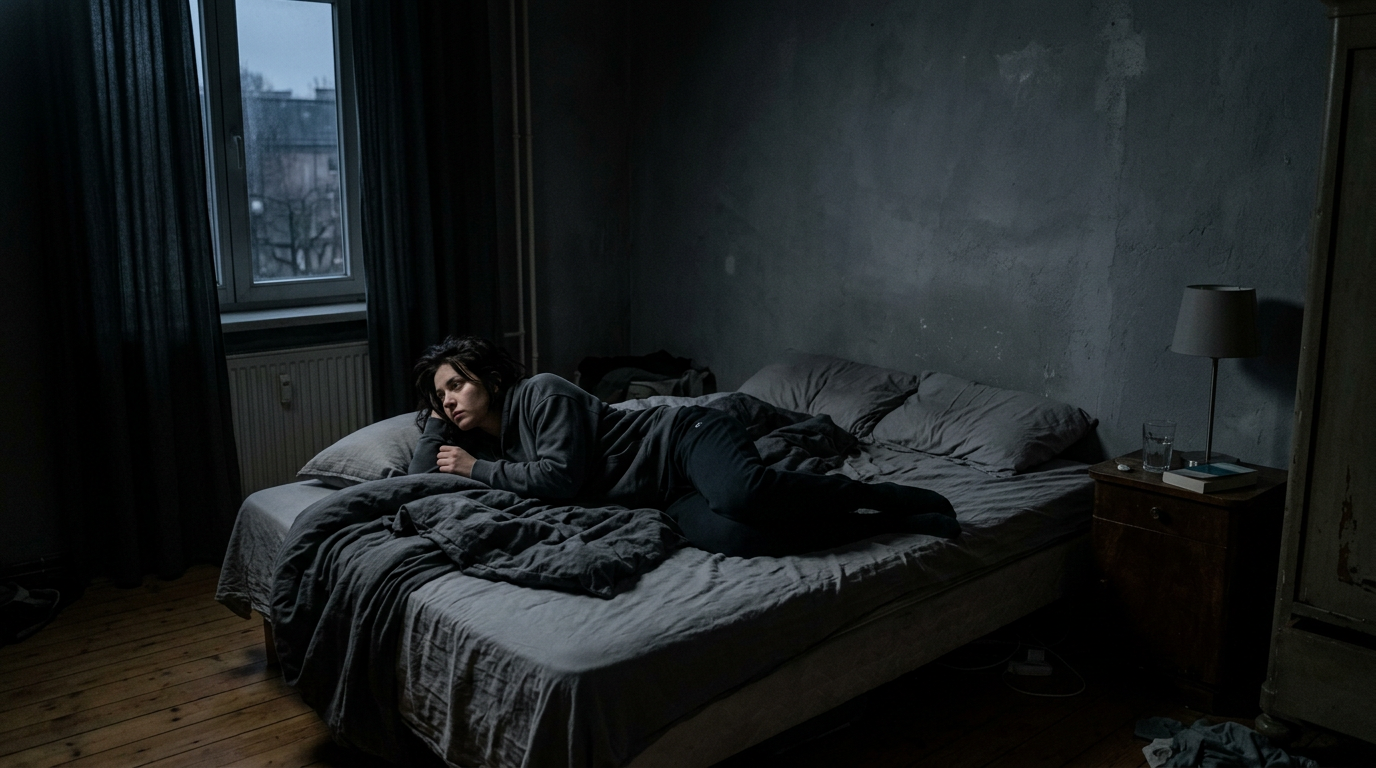
I mean the low grey month that arrives without warning and refuses to lift. The stretch of sleeplessness that turns everything watery around the edges. The anxious Tuesday that becomes an anxious week and then, before you’ve named it, an anxious year. The sadness that has no event attached to it. The tiredness that isn’t physical. The dull static that sits between you and the rest of the world for so long you forget what it felt like before.
If you know what I’m talking about, you don’t need me to describe it further. You’ve lived it.
The Difference That Matters
Consider, for a moment, what happens when you break your arm.
You show up somewhere with a cast. Someone signs it. Colleagues cover your shift. Your mother — if you have one — sends a voice note asking if you’re eating. A friend brings soup. There’s a get-well card, however small. There is, unmistakably, a script for physical illness. The world knows what to do. And you — the person in the cast — know how to be sick. You accept the soup. You show the cast. You collect the sympathy. You heal.
Now consider what happens when your mind breaks — not dramatically, just quietly. A depression. A sustained anxiety. A grief that has no clean object. An eating pattern that’s gotten strange. A relationship with alcohol that’s shifted. A month where nothing has been fun. A year where nothing has been fun.
You cannot show a cast. There is no visible thing to hand people. And so, in almost every case, you have to choose whether to speak — whether to convert a private weight into words and offer those words to another human.
For most people, this is already hard. For solos, it is often impossible.
Not because we’re weaker. Because we’ve done the math on what happens next.
The Question That Follows Every Admission
Here is what happens, in my experience and in the experience of almost every solo person I’ve talked to about this, when you attempt to name a mental health struggle out loud.
You take a breath. You say some version of: “I’ve been having a really hard time lately. My head hasn’t been in a good place.”
And the person you told — who loves you, who means well, who is not trying to hurt you — pauses. And then, with genuine concern in their voice, they ask some version of the question:
“Do you think it might be because you’re on your own so much?”
“Have you considered that maybe if you had a partner…?”
“Are you sure you’re not just lonely?”
“When was the last time you went on a proper date?”
“You should really try to socialise more.”
“Have you thought about maybe adopting a pet?”
Every one of these questions is asked with love. That’s part of what makes them so exhausting. You cannot even be angry, because they care. They are genuinely trying to help. But the effect of the question is unmistakable: the conversation has just shifted. You came in to name an illness. You are now expected to defend the entire architecture of your life.
Suddenly you are explaining. You are reassuring the concerned face across from you that yes, you do have friends, yes, you did try dating apps, yes, you’re aware of the CDC study on loneliness, no, you don’t actually think a boyfriend would fix your depression, yes, you have considered a cat.
You came for care. You are now filing a report.
And by the end of the conversation — the one you initiated for help — you are more tired than you were before. Not because the person did anything cruel. But because the cost of being heard included a compulsory interview about your life shape that a partnered person having the same conversation would never be required to sit through.
Nobody tells a married man with clinical depression that he should “maybe try being single for a while.” Nobody suggests to a woman with anxiety who has three children that she should “just have fewer commitments.” The question is only ever asked in one direction. It is asked of the solo person, because the culture has quietly decided that solo living is a modifiable condition — and therefore any suffering that co-occurs with it must be its consequence.
That’s the interrogation. That’s what’s really being asked when a friend gently wonders if your mental health might improve with a partner. Not: are you healthy? But: why are you like this?
The Math We All Do
So now we come to why we go quiet.
Every solo who has been through this at least once — and most of us have been through it many times — begins to run a quiet, private calculation before we speak:
If I say something, I will need to defend my life. I will need to reassure them I’ve thought about it. I will need to correct the assumption that being alone is causing the sadness. I will need to be bright enough during the conversation to not confirm their theory. I will need to nod at unsolicited advice. I will need to thank them for their concern. I will need to reassure them that I’m “okay, really, don’t worry.” I will need to end the conversation more emotionally regulated than I was when it began — because otherwise I’ve given them evidence that they were right.
If I say nothing, I carry it alone.
Read those two options carefully. Notice something.
The “silent” option is often the lighter one.
That’s the whole tragedy. We don’t go quiet because we’re weak. We don’t internalise because we’re ashamed. We do it because we’ve correctly assessed that speaking will cost more than staying silent — and we’re already running on a very thin fuel supply.
This is not strength. This is a tax.
The world charges solos a specific tax on mental health disclosure that it does not charge partnered people. And most of us, most of the time, decide we cannot afford to pay it.
So we swallow the low month. We manage the anxious year. We make it through the grief with no witness. We become extraordinarily good at performing wellness to the outside world, and privately much more unwell than anyone knows.
You are not imagining this. You are not being dramatic. You are responding rationally to a real cost.
What This Costs Us
There’s a reason I want to name this clearly, and it isn’t just to validate what you’ve been feeling. It’s because there is a cost to the silence — a cost we don’t often talk about — and I want to lay it out honestly.
The illness gets worse in the dark. Depression that goes unnamed for a year is heavier than depression that gets named at three months. Anxiety that isn’t spoken about becomes a private cathedral of ritual. Grief that has no witness sometimes calcifies into a version of yourself you don’t recognise. The math of “silence is lighter” is true in any given conversation — but false over the long arc of a year. The interest compounds.
We start to believe the question. The scariest thing about the interrogation isn’t the conversation itself. It’s what happens after enough of these conversations, when we start to internalise the question and ask it of ourselves. “Maybe it is because I’m single. Maybe if I’d made different choices. Maybe I’m imagining that this isn’t the reason. Maybe everyone’s right.” The interrogation, done to us enough times, becomes a voice inside our own head. And that voice is much crueller than any friend ever was.
We miss the actual help. Because we’ve conflated “speaking about mental health” with “defending our life choices,” we sometimes miss the fact that real help exists — help that would never ask the interrogation question at all. We equate all disclosure with the exhausting kind. And so we don’t seek out the kind that would actually be safe.
Which brings me to the small door I want to open at the end of this essay.
A Small, Real Door
There are people whose entire job is to witness the illness without interrogating the life.
They are called therapists — good ones — and speaking to one is not, as the culture sometimes implies, a confession of failure. It is not an admission that your life doesn’t work. It is not a signal that your solo living has “gone too far.” It is, in fact, the opposite of all those things.
A therapist is the specific human being you can walk in to and say “I’ve been really unwell lately” and receive, in response, only care — not a question about your relationship status, not unsolicited advice about socialising, not a theory about how your life shape might be causing this. A good therapist knows the interrogation is not the same as the illness. They will spend zero minutes on your life shape unless you decide to bring it up. They will spend all their minutes on the actual weather inside your head.
If the reason you’ve been silent is that you cannot bear another well-meaning interrogation — a good therapist is literally the person for whom that fear doesn’t apply. It’s the job description. It’s the whole point.
I want to be careful here, because I know some of you will read “therapy” and immediately want to close this essay. It’s expensive. It’s culturally loaded. It’s exhausting in its own way. It sometimes doesn’t work. All of that is true.
But so is this: for a lot of us, therapy is the shortest path to being heard without an interview. In terms of hours-of-emotional-labour-required, it is often cheaper than the average conversation with a well-meaning family member. You do not have to reassure your therapist. You do not have to perform for them. You do not have to protect their theory of your life. You get to just be sick, and be heard, and — slowly — get better.
If that access is not available to you — for cost, for geography, for cultural reasons, for any reason at all — there are other doors. A good GP who takes mental health seriously. A community-based counsellor. A helpline where the person on the other end doesn’t know you and cannot possibly interrogate your life. A support group for people going through similar things. A trusted friend who has explicitly agreed, in advance, to not offer advice or ask why-questions — just to sit and listen. Some of these doors are more accessible than we assume, and it can help to look for the one that fits, rather than deciding all doors are closed because the first one was.
The door is not: tell everyone. The door is: find one person, or one professional, or one anonymous line, that has been designed to receive what you need to say — without the interview.
That’s it. That’s the whole ask.