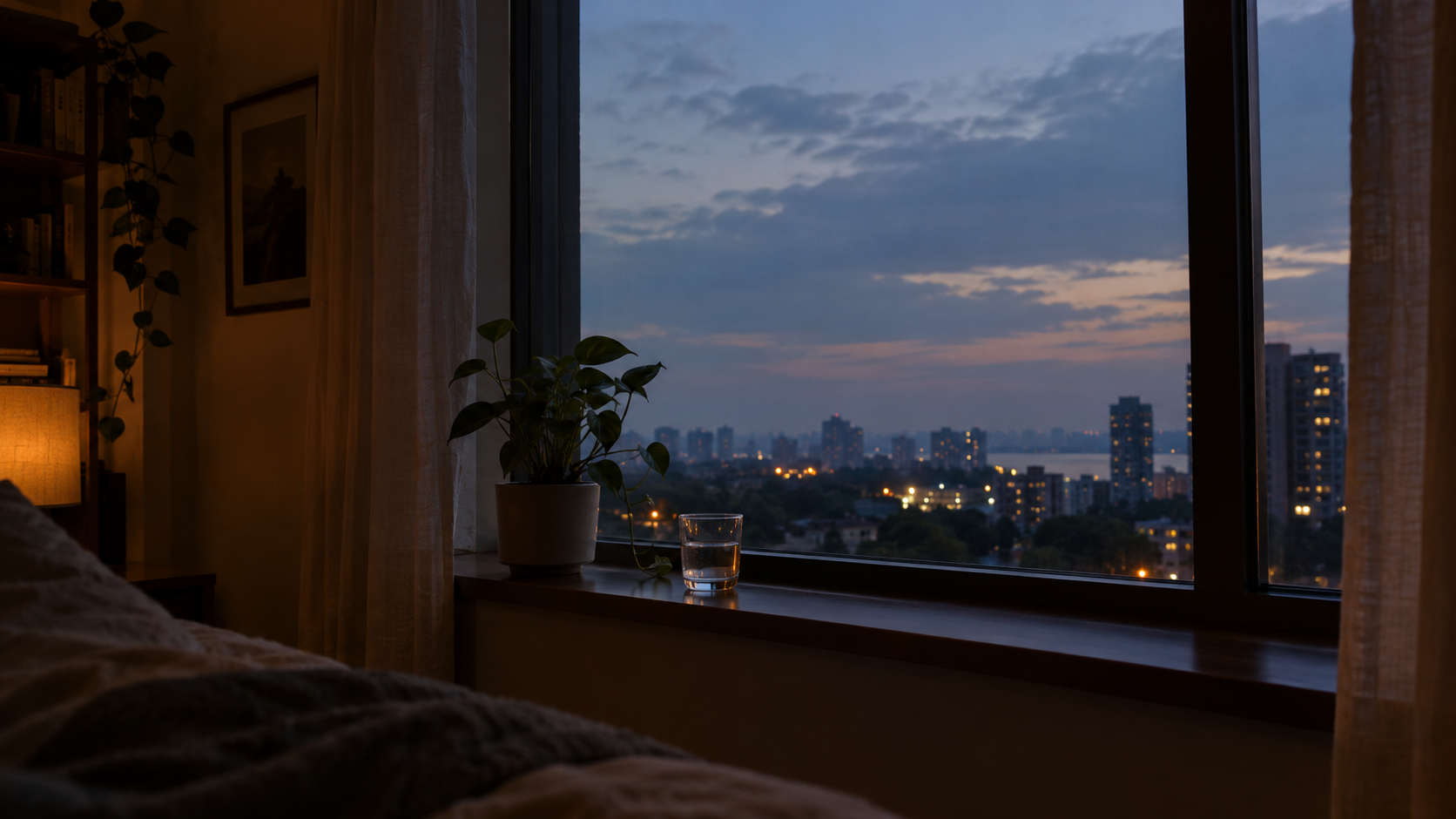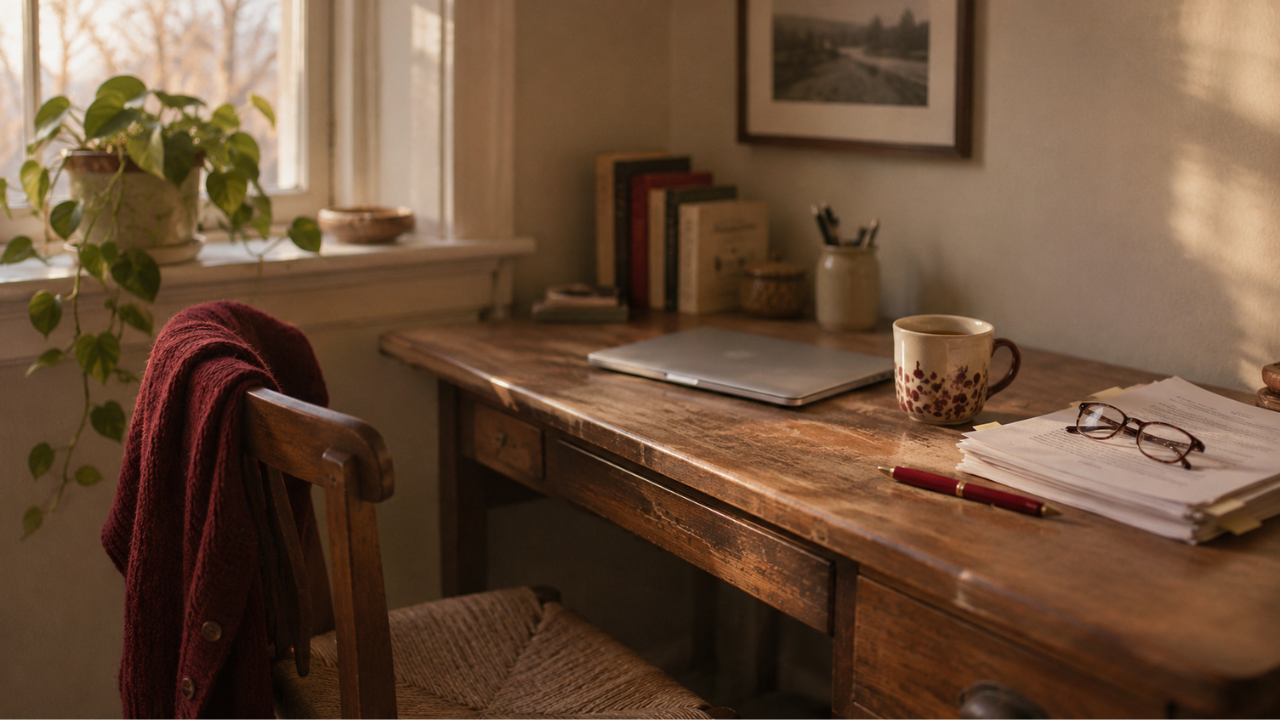
The unadvertised capacities a solo life grows — and the quiet way they reveal themselves when a hard season arrives.
There is a specific kind of discovery that solo people tend to make, mid-crisis, and almost nobody writes about it.
The crisis is not the point of this essay. The crisis — whatever it is, for whichever solo — is just the conditions under which the discovery becomes visible. A parent’s diagnosis. A partner’s absence that turns out to be permanent. A job loss that lands in the lap of someone with no financial co-pilot. An illness of one’s own. A legal mess. A family emergency that falls, with its full weight, on the one member who happens to live alone.
The crisis is the setting. The discovery is what happens inside the setting, and it is the thing worth naming.
What solos discover, mid-crisis, is this: the capacities built quietly over years of solo living — the ones that looked like nothing from the outside, the ones the world sometimes suggested should be “worked on” — turn out to be exactly what the crisis requires.
Not approximately. Not after some adjustment. Exactly.
And the discovery is often accompanied by a strange, quiet shock. Because for years, the solo life felt like a life — just a life, neither preparation nor rehearsal. And then the hard season arrived, and suddenly every quiet habit, every small competence, every un-applauded discipline turned out to be the specific equipment the hard season needed.
The solo years were not training. They were just the years. But the life, lived honestly, had been building infrastructure it never advertised.
This essay is about that infrastructure.
Capacity One: The Ability to Read Silence
Solo living is a long education in silence.
The silences of a solo evening at home. The silences of a solo Sunday afternoon. The silences between the end of one friend’s text thread and the beginning of the next. The silences that fill the rooms of a life that does not have a partner’s ambient noise inside it.
For years, this is just the texture of the solo life. It is not called a skill. It is not listed on any resume. It is simply what a solo evening sounds like.
And then the hard season arrives. A hospital corridor. A waiting room. A specialist’s consulting office. A late-night phone call with a sibling that ends in a silence neither one of them quite knows how to fill.
And the solo person discovers, suddenly, that silence is now a language she speaks fluently.
She can read the silence of a doctor who is choosing words carefully. She can hear what is not being said in a prognosis. She can sit, un-fidgeting, in a hospital waiting room for three hours without needing to fill the air. She can register the specific quality of silence in a loved one’s hospital room — the silence of sleep, the silence of discomfort, the silence of thinking — and respond to each one correctly.
This is not an inherited skill. This is not a trained one. This is the quiet, decades-long apprenticeship of being comfortable in one’s own silence, now showing up as the ability to be comfortable in — and competent inside — other people’s silences.
Partnered people, in these settings, often struggle. Not because they are less loving. Because silence, for someone who has lived most of their life inside ambient household sound, is unfamiliar territory. They reach to fill it, which is sometimes the wrong thing. They misread quiet as distress, which is sometimes wrong too. Their reflex is to narrate, to comfort, to break the stillness.
The solo person, in contrast, rests in the stillness. Because the stillness is the room she has been living in her whole adult life. It is the one territory she is at home in.
The years of apparent isolation were, it turns out, a long apprenticeship in a very specific skill: reading what humans mean when they are not speaking. Nobody called it that at the time. But it was.
Capacity Two: Clinical Fearlessness Toward Hard Documents
A solo person spends decades reading, interpreting, and acting on documents without a second brain in the room.
Insurance policies. Lease agreements. Investment statements. Tax forms. Visa paperwork. Loan applications. Medical consent forms during one’s own illnesses. Property documents. Employment contracts.
Partnered people often distribute this cognitive labor. “You read the contract, I’ll handle the taxes.” The emotional weight of a dense document — the specific fear of missing a clause, misreading a term, signing something one does not fully understand — is halved by the presence of someone else in the room who can read it too.
Solo people do not halve this weight. They absorb the whole of it, every time, for years.
What this quietly builds is a clinical fearlessness toward hard documents. The solo person has read enough small print to know that small print is mostly readable with patience. She has filed enough claims to know that forms are mostly forms. She has sat with enough dense legal language to know that density is not the same as incomprehensibility. And she has done all of this alone, which means she has developed an internal mechanism for parsing hard documents without an external mirror.
When the hard season arrives and the documents become medical, the capacity transfers directly.
The solo person can read a pathology report. Slowly, with a highlighter, looking up each unfamiliar term, but without panic. She can parse a treatment protocol. She can compare two specialists’ differing recommendations and understand what each one is actually recommending. She can read ten pages of consent forms before a procedure and know which questions to ask.
She does this because she has been reading hard documents alone for twenty years. The medical version is a new vocabulary, but the underlying competence — how to sit with a dense document, how to break it into parts, how to form questions out of confusion, how to decide without a second opinion in the room — was already there.
Partnered people, in medical settings, frequently need to retreat and “look at this with my spouse” before they can respond. This is reasonable. It is also, sometimes, slow. The solo person, trained by decades of practice, can often read, process, and respond in a single sitting. Not because she is braver. Because she has done this before, a thousand times, in less dramatic documents, and the muscle is already built.
Capacity Three: A Nervous System That Has Learned to Regulate Itself
This is the one that matters most, and it is the one nobody notices until it is needed.
A solo person spends every evening regulating her own nervous system without the buffer of another human in the room. There is no partner whose steady mood lifts hers. There is no small conversation at the dinner table that quietly resets her. There is no body next to hers on the couch whose presence, by itself, calms the end-of-day static.
The solo person, over years, becomes her own regulation system. She learns what music settles her. She learns which rituals land the day. She learns which foods are her emergency foods, which routines are her reliable floors, which small movements of her evening — a bath, a walk, a specific cup of tea, a specific window of silence — turn a hard day into a landed one.
For years, this is just how she lives. She does not think of it as skill. She thinks of it as Tuesday evening.
And then the hard season arrives. And she finds herself in a hospital waiting room, or on a long midnight drive to a parent’s emergency ward, or in a lawyer’s office being told something she did not expect — and her nervous system does not fall apart.
It stays level. It does what it has been doing every evening for twenty years. It regulates itself.
Partnered people, in high-stress medical or legal settings, often rely on their partner’s presence to stay regulated. The partner’s hand, the partner’s voice, the partner’s mere physical proximity does half the regulation work. When the solo person arrives alone, she does not have this. But she also does not need this — because she has been doing all of the regulation herself for so long that the hospital waiting room is, strangely, not worse than her Tuesday evening. It is just a different room.
This is one of the most under-recognized assets of chosen solo living. The nervous system that has trained itself to regulate alone is, by the time a crisis arrives, an extraordinarily competent nervous system. Not because it is tougher. Because it has been doing the specific work — the un-buffered, self-metabolising, no-one-else-in-the-room work — for years.
A crisis does not test this nervous system. It simply asks it to do what it has been doing every evening of its adult life. The rooms change. The regulation does not.
Capacity Four: The Ability to Sit With Weight Without Rushing to Fix It
This is the capacity that gets most badly misunderstood, and the one that turns out to be the most quietly valuable.
Solo people, by virtue of living alone, develop a specific tolerance for sitting with heavy feelings without immediately reaching for a solution. There is nobody in the room to do the fixing with, so the reflex to fix is never fully formed. The solo person learns, instead, to sit — with the sadness, with the ache, with the hard news, with the long weight — and let the feeling simply be in the room, next to her, until it moves through.
For years, the world reads this as a liability. The solo person is told she is too much in her head, too comfortable with heavy feelings, insufficiently proactive, in need of “doing something” about her moods. The implication is always that sitting with weight is a form of wallowing, and that a healthier person would be acting on the weight instead.
Then the hard season arrives. And the solo person discovers that the capacity to sit with weight without rushing to fix it is, in fact, the single rarest and most valuable skill in a room full of grief.
Because the grieving person — the parent in the hospital bed, the friend who has just received hard news, the sibling who is barely holding it together — does not need to be fixed. They need to be accompanied. They need someone in the room who can sit with their weight without trying to lift it, without trying to reframe it, without trying to distract them from it, without rushing to problem-solve their suffering into something smaller.
Most people cannot do this. The reflex to fix is strong, and for most adults, well-trained. People in grief are frequently surrounded by well-meaning humans who cannot stop doing things — bringing food, offering advice, suggesting therapists, proposing distractions, filling the air with coping language. The grieving person, under all of this, often feels not held but managed.
The solo person does not manage. She sits.
And the person in grief, almost universally, recognises the difference. Something in them exhales. Finally, they think — without ever quite saying it — someone in the room is not trying to make this smaller.
The world called it isolation. The world called it over-thinking. The world called it something to work on.
It was, all along, the exact capacity this moment required.
Capacity Five: The Trained Habit of Showing Up Alone
This is the last one, and in some ways the deepest.
Solo people spend decades showing up alone. To weddings. To airports. To doctor’s appointments. To restaurants. To apartments viewings. To therapy. To the gym. To work events. To funerals. To hospital admissions for their own illnesses. To visa interviews. To the courtroom for a will or a dispute or a bureaucratic knot.
Each of these is a small social act that most of the world performs accompanied, and that the solo person has learned to perform alone. The first few times, there is self-consciousness. The world’s gaze lands. There is the specific discomfort of being the only one at the table, the only one at the counter, the only one in the taxi, the only one who looks like they are not here with anyone.
Over years, this discomfort evaporates. Not because the solo person becomes thick-skinned. Because the solo person simply stops registering that showing up alone is a notable act. It becomes, instead, the normal way she moves through the world. One person, one body, one presence, one signature, one witness.
When the hard season arrives, this trained habit becomes infrastructure.
The solo person can show up at the hospital alone. Can sit in the consultation alone. Can sign the forms alone. Can take the elevator up to the ICU alone. Can walk into the pharmacy and pick up a heavy prescription alone. Can call the ambulance alone. Can drive a parent to chemotherapy alone and sit in the waiting room and read the pamphlet and ask the nurse the follow-up question and drive the parent home — all of it, alone.
She does not freeze at the threshold of these solo acts. Because she has been crossing solo thresholds for twenty years. The medical threshold is just one more.
Partnered people, in crisis, often have to re-learn how to show up alone. Their partner might be unavailable. Their partner might be at work. Their partner might be the patient. And suddenly they have to do what the solo person has been doing all along — walk into a difficult room, alone, and act. For partnered people, this is often the hardest part of the crisis.
For solo people, it is Tuesday.
The Pattern Worth Naming
Read the five capacities together and the pattern becomes visible.
Every one of them is not a strength the solo person consciously built. They are side effects of a life lived without a partner’s buffer, performed quietly, over years, with no applause and often with real cultural suspicion.
Reading silence. Parsing hard documents. Self-regulating. Sitting with weight. Showing up alone.
None of these were taught in any curriculum. None were listed in any self-help book as the targeted outcomes of solo living. None were advertised. None were recognised. In fact, several of them were actively pathologised — the world suggesting, at various points, that a healthier person would be less comfortable with silence, less willing to parse things alone, less able to sit with heavy feelings, less inclined to show up solo.
And yet. When the hard season arrives — and it arrives, eventually, for almost every adult — these five capacities turn out to be exactly what the hard season requires.
Not luck. Not preparation. Not wisdom.
Infrastructure. Built invisibly, by the daily act of living a solo life honestly, over years that nobody applauded at the time.
The solo life does not sell itself as preparation for a crisis. It should not. It is a life, not a rehearsal. But the honest claim worth making is this: a solo life, lived with care, builds capacities that other kinds of lives have to assemble from scratch when the hard season arrives.
The solo person does not have to assemble. She arrives already assembled. Not because she is strong. Because the life she has been living all along was quietly doing the work.
A Small Closing Thought
If you are a solo person currently inside a hard season, and you have surprised yourself with your own competence — if you have found yourself reading medical reports with clinical calm, sitting in hospital corridors without flinching, showing up to specialist appointments without a hand to hold and being okay in the specialist appointments — know this:
You are not surprising yourself because a stranger has emerged in a crisis.
You are surprising yourself because the person who showed up was already you. The years of solo living, the ones you may have sometimes wondered about or defended, were quietly building the person who could meet this moment.
You were not alone in those years. You were in training. You just did not know it. And neither did the life.
Nobody called it preparation. It was not preparation. It was the life.
But the capacities came with it. And now, when you need them, they are here.
Already. Waiting. Quiet. Ready. 🤍
p.s. If you have discovered a capacity, mid-season, that the solo years quietly built — something small, something private, something you did not know you had until it arrived — hit reply and name it. Not to display it. Just to say it out loud, once, where someone will hear. These letters are read, held, and never shared.